
How do I store my drysuit?
Taking care of your drysuit
Your own dive gear is a considerable investment, so you want to enjoy it for as long as possible. That is why it is important to look after your equipment. But what is the best way to fold your drysuit, and how do you maintain your zippers? Eddy van Vliet of Scuba Support gives practical tips for your drysuit.

1 Wax the drysuit zipper
For your drysuit zipper it is best to choose a zipper wax made specifically for drysuits. Many people use a special zipper lubricant, but sand and salt crystals stick to it. Wax is a better option and it also glides better. Melting wax with a tea light is out of the question; it softens the rubber around the zipper. First clean the teeth of the zipper with a toothbrush. Close the zipper and rub the wax along and between the teeth. Do this every 5 dives.
2 Prevent fraying
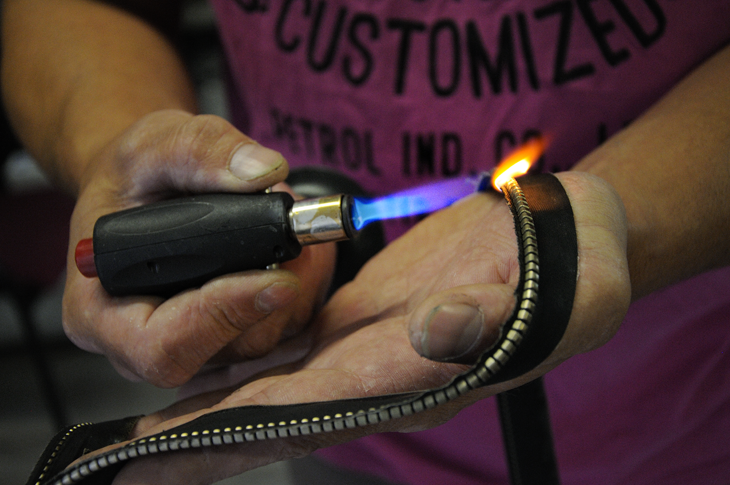
Never let your zipper kink. A zipper seals with the teeth on the back that interlock and the rubber flaps that press together. Something you do see now and then is fraying. If you have it, it is best to trim it away as much as possible. If you don't, your zipper will deteriorate very quickly. Singe the loose threads with a lighter or small torch to prevent further fraying. Take care not to burn the rubber flaps!
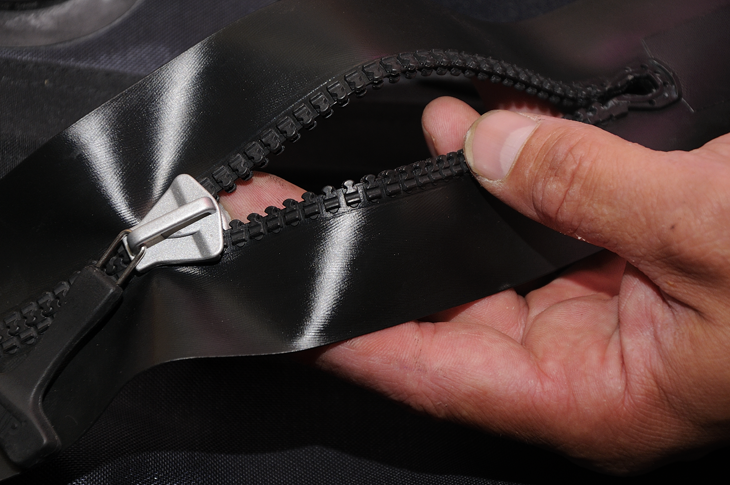
3 Cleaning a T-Zip
For the plastic zipper, the most important part is the end of the zipper. This part tends to cause leaks. A T-Zip runs very smoothly, but when closing it you sometimes feel resistance at the end. Many people then think the zipper is closed, but it is not. Pay close attention to this to prevent leaks! That is why it is very important to keep this part clean with a toothbrush. Then lubricate it with T-Zip grease.
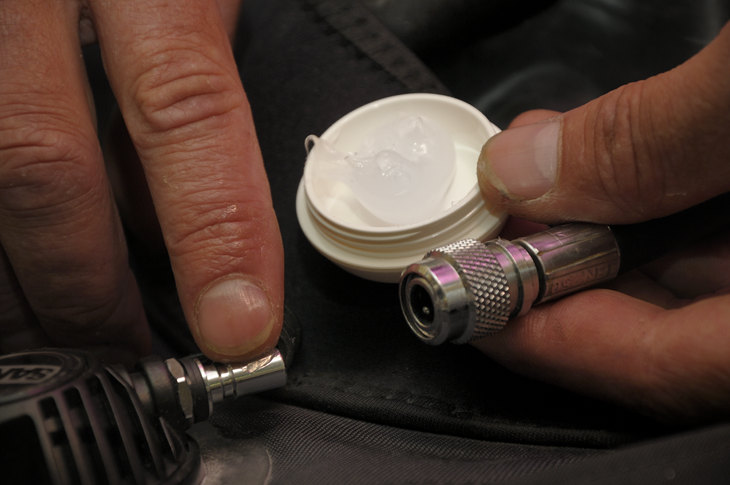
4 Lubricate the inflator
Inside the drysuit hose there is an O-ring that seals the inflator nipple. Lubricating this O-ring is tricky. The best way is to put a little silicone grease on the nipple of the inflator. Connect the drysuit hose and turn it. This greases the O-ring and prevents leaks and wear. You don't need to do this every dive day, but do it every now and then, especially if connecting the hose feels stiff.
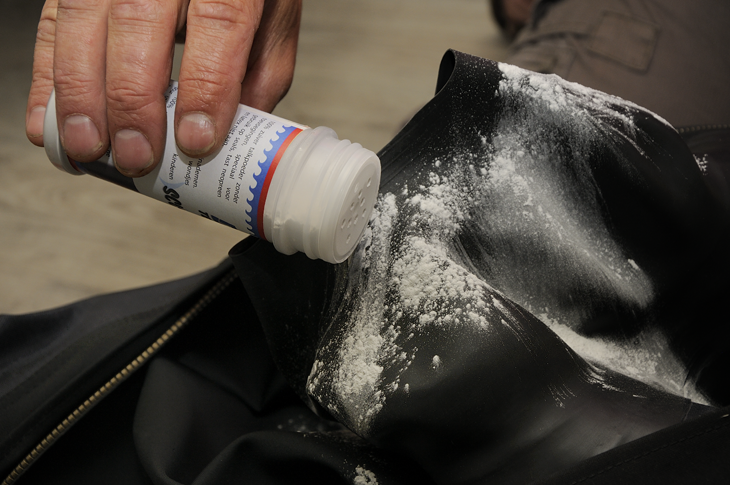
5 Talc
Apply talc to the latex or neoprene seals of your suit before and after the dive, both on the outside and the inside. Make sure your suit is dry! Spread the powder over the seal by hand. This preserves the seal and makes it easier to get into. Use unscented talc, because scented products such as baby powder contain substances that soften the seals. For latex you can also use Sealsaver, but not for neoprene.
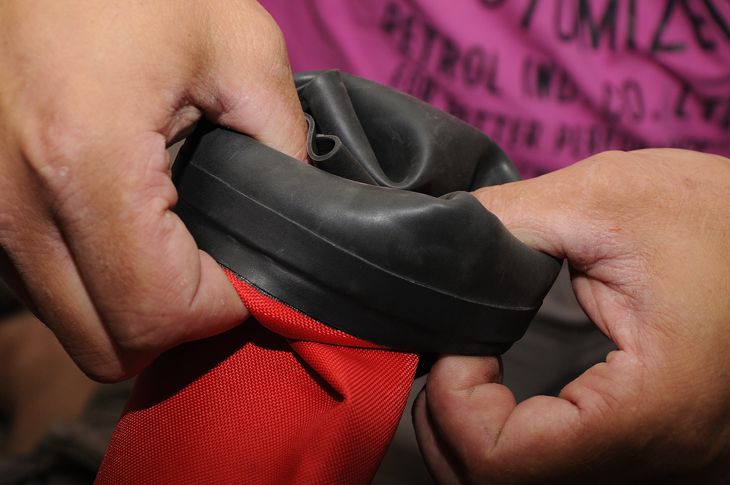
6 Seals inwards
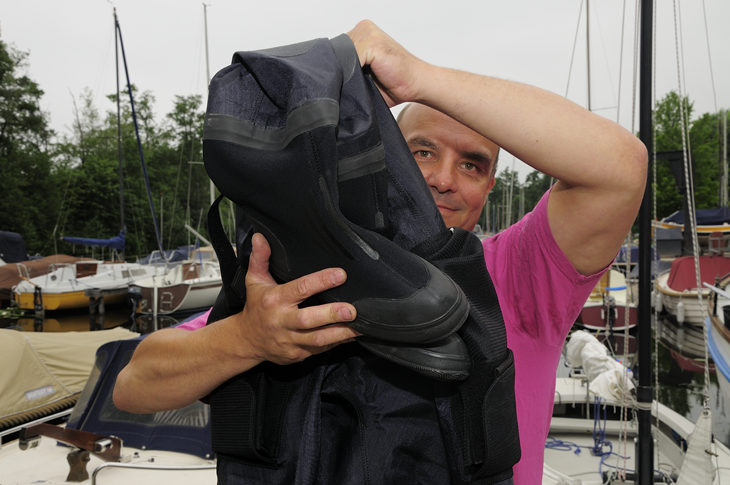
When you fold your drysuit, you want to protect all fragile parts such as seals and zippers. Protect the wrist seals by folding them inwards. It is important that the fold is in the sleeve and not in the seal. That way they are well protected. The same applies to your neck seal, which you can also simply fold inwards.
7 Folding
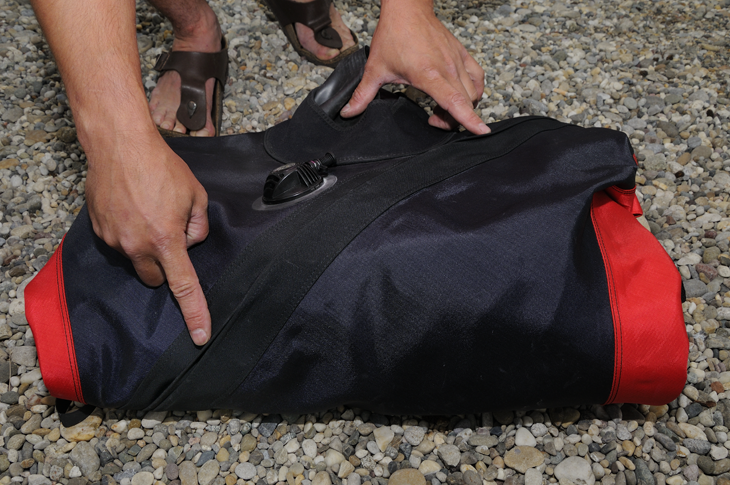
Make sure your suit is dry. With a front zipper, always roll the suit towards the back; feet first, then the rest. This gives the zipper the largest possible radius so it will not kink. A metal zipper is somewhat more vulnerable than the newer, very flexible plastic zipper. Once a plastic zipper has been kinked it leaks, but if you open and close it once it is watertight again. Once a metal zipper has been kinked, it will leak for good.
8 Largest radius
Rolling up your suit this way clearly keeps the radius of the front zipper as large as possible. With a T-Zip the radius is much larger, so you can fold it smaller if you need to. Store your drysuit dry and at room temperature. A cold shed does the suit no good, and neither does sunlight.
Leaking zipper or worn seal? Read more about our drysuit repair.
Published in: DUIKEN Magazine
Text: Judith Rietveld
Photos: René Lipman